
![[Дxponential F♠] CIA & Pentagon: Arithmetic, Population & Energy Exponents Economics 101 Crash Course](https://blogger.googleusercontent.com/img/b/R29vZ2xl/AVvXsEhbCOO1PP_3pOLtUkHMjAej6zQSY15RJUVvr0fkWKuiAKZTtF_Az2PxpQx974GR6X8D5YTCRwOMtBe5b4Awu1Hgp8tqbp9aq4cs44K8NsmOUWMMH_JwdB1PCMZpopd3-NrXf2EBCfjk9VQ/s400/FertilityStimulus.jpg)
“Mr. Chairman, we have in this Country one of the most corrupt institutions the world has ever known. I refer to the Federal Reserve Board and the Federal Reserve Banks, hereinafter called the Fed.” -- Rep. L. McFadden
“You are a den of vipers and thieves. I intend to rout you out, and by Eternal God, I will rout you out.” -- Pres. Andrew Jackson
“…If you want to continue to be the slaves of bankers and pay the cost of your own slavery, then let bankers continue to create money and control credit.” -- Sir Josiah Smith, Director, Bank of England, 1927
What is the Mandrake Mechanism?: It's the most important financial lesson of your life!! It is the method by which the Federal Reserve creates money out of nothing; the concept of usury as the payment of interest on pretended loans; the true cause of the hidden tax called inflation; the way in which the Fed creates boom-bust cycles.
~ SIGINT: Romeo Russian Roullette Geo-Finance-Chernobyl-Poker Intelligence Conspiracy ~
______________________________________________________________
The US Federal Reserve Bank: Dirty Secrets of the Temple
by Stephen Lendman, Global Research
July 1, 2006 Years ago I read William Greider's excellent book published in 1987 on how the US Federal Reserve System works. It was detailed and explicit and makes wonderful and informative reading, except for the solution he suggests to a huge problem. His was far too timid. This article proposes a much different one. Greider called his book
Secrets of the Temple with a sub-title:
How the Federal Reserve Runs the Country. A better sub-title might have been how the Fed (and other key central bankers) runs the world. This article attempts to summarize what it does, how it does it, for whose benefit and at whose expense. For those who don't know, prepare for some stunning information and commentary.
Let's be clear at the outset. The US Federal Reserve, Bank of England, Bank of Japan and the European Central Bank (for the 12 European countries that adopted the single euro currency in 1999) are institutions with enormous power far beyond what most people everywhere can imagine. These most dominant of all central banks, as well as most others, have a powerful influence on the financial conditions in virtually all countries including their own, of course, in an increasingly borderless financial world where a significant economic event in one nation can affect most others for better or worse.
One other powerful bank is also part of today's financial world. It needs mentioning because of its importance, even though it requires a separate article to explain how it works more fully. It's the secretive, inviolable and accountable to no one Bank of International Settlements (BIS) founded in 1930 and based in Basle, Switzerland. This bank most people never heard of is the central banker to its member central banks - a sort of banking "boss of bosses" equivalent to what apparently exists in the shadowy world of Mafia dons. Like most other central banks, including the Federal Reserve (explained below), it's privately owned by its members.
It's believed by some academicians and others who've studied the BIS that the ruling elite of financial capitalism established this bank of banks to be the apex of power to exercise authority over a world financial system owned and controlled by them. It's thought their plan was to use this bank to dominate the political system of every country and control the world economy in a feudalistic fashion. In a word, the thinking goes that these super-elite want to rule the world by controlling its money, and they set up this supranational all-powerful bank of banks to do it. As important as that is, that discussion remains for another time as the intent of this article is to focus solely on the US Federal Reserve.
The dominant central banks and BIS, together with most others, wield their influence in cartel-like alliance with each other to assure they all benefit more than they otherwise would without such a cozy arrangement. With their immense power it's no play on words to say these financial institutions do indeed rule the world. Because they're able to create money, they fund the needs of their governments, their militaries and all business activity that couldn't function without a ready supply of that most needed of all commodities. It's money, not love, that makes the world go round, and central bankers have the power to create or remove from circulation as much or little of it as they choose and for whatever purpose they have in mind. That kind of power can move mountains or destroy them.
No nation's central bank is more powerful today than the US Federal Reserve, but it wasn't always that way, and it now has competition for the top spot it hasn't known since WW II. The Fed, as it's called, has existed since it was first established by an act of Congress in 1913. But the Bank of England has been around since Britannia ruled the waves beginning in 1694 when King William III needed help funding the kind of escapade that takes lots of ready cash - war. Back then it was with France, and the king needed a friendly banker to print it up for him to help him fight it. He also needed financial help to facilitate trade and manage the country's debt that always mounts up when wars are fought. The Bank of England wasn't the first central bank, but it was the modern world's first privately owned one in a powerful country. It was called the Bank of England to keep the public from knowing that it, like our Federal Reserve, was and still is privately owned and not part of the government. It was also the model used in the formation of our own central bank and most others.
The Brits may have had a 219 year head start on the Fed, but central bankers are only as powerful as the countries they represent and their economies. Today the former dominant Brits must settle for a far lesser role as being just one of many junior partners to a US hegemon that emerged post WW II as the world's dominant economic power. It still is today, even though some credible experts believe this country may have seen and past its peak and is now in decline. Some go further and claim our decline has been accelerated by the disastrous policies of the Bush administration that irrationally believes waging war on the world without end is the way to rule it, promote endless economic growth and dominance, and thus preserve the nation's preeminent position as the reigning economic champion.
It's easy to challenge that view and think that champ has climbed into the ring a few times too many, has endless plans for more return engagements, and is likely to meet the same fate many a former human one did who didn't know when to quit and ended up with chronic brain damage known as dementia. The lesson from history is always the same. The price for reckless behavior is high, painful and inevitable. It's true for countries as well as individuals, but too often neither one sees it until it's too late. The biggest difference between the US today and other nations in the past that paid dearly for not yielding when their day had passed is that we have an all-powerful arsenal others never did. Should we decide to use it, there likely wouldn't be much left behind for a successor. Not a pleasant thought, but a very real one.
It All Began in 1910 On Jekll IslandIt sounds like the title of a horror movie, but the real life events that happened at this privately owned island off the coast of Georgia in 1910 would have challenged even the Hollywood bad dream factory to come up with.
It was here that seven very rich and powerful men met in secret for nine days and created the Federal Reserve System that came into being three years later on December 23, 1913 by an act of Congress. Since that time, the nation and world would never be the same, but only the rich and powerful were the beneficiaries. That was the whole idea, and it worked as planned.
The Federal Reserve Act that began it all must surely rank as one of the most disastrous and outrageous pieces of legislation to the public welfare ever to come out of any legislative body. It may have also have been and still is illegal according to Article 1, Section 8 of the Constitution which happens to be the inviolable law of the land. The article states that Congress shall have the power to coin (create) money and regulate the value thereof. In 1935, the US Supreme Court ruled the Congress cannot constitutionally delegate its power to another group or body. The Congress thus acted in violation of the Constitution it's sworn to uphold and in so doing created the Federal Reserve System that, as will be explained below, is a private for-profit corporation operating at the expense of the public welfare. By its action, our lawmakers committed fraud against the people of the country and so far have gotten away with it without the public even knowing about the harm done.
The shameful result is that what should have arrived stillborn is now the most dominant institution on earth, and all because of what began on a privately owned island with a scary name. But had the Congress acted responsibly, the act of Fed creation might never have happened. The legislation establishing it was so harmful to the public interest, it likely never would have passed if it hadn't been shepherded through a carefully prepared Congressional Conference Committee meeting scheduled for between 1:30 - 4:30 AM (when most members of Congress were asleep) on December 22, 1913. The Act was then voted on the next day and passed although many members of the body had left for the Christmas holidays and most others who stayed behind hadn't had time to read it or know its contents. Sound familiar? Still it passed (like a thief in the night) and was signed into law by an unwitting or complicit Woodrow Wilson who later admitted he made a terrible mistake saying "I unwittingly ruined my country." But it was too late for postmortems, and the American people have paid dearly ever since. It's about time the public understood that and began to demand an end to over 90 years of damage done.
It almost happened 43 years ago when one president decided to act on behalf of the people who elected him. That man was John Kennedy, who before his death planned to end the Federal Reserve System to eliminate the national debt a central bank creates by printing money and loaning it to the government. That debt has now risen to over $8,400,000,000,000 ($8.4 trillion) which every taxpayer must pay for and has done so in the amount of nearly $174,000,000,000 ($174 billion) in just the first three months of 2006. This debt service is now an annualized amount exceeding two-thirds of a trillion dollars. It's made the bankers rich (which was the whole idea) and the public poorer because we're taxed to pay the tab. It's no exaggeration to call this the greatest financial scam in world history and one that gets greater every day.
The debt was less onerous 40 years ago, but Kennedy understood its danger to the country and the burden it placed on the public. Thus, on June 4, 1963, he issued presidential order EO 11110 giving the president authority to issue currency. He then ordered the US Treasury to print over $4 billion worth of "United States Notes" to replace Federal Reserve Notes. He intended to replace them all when enough of the new currency was in circulation so he could end the Federal Reserve System and the control it gave the international bankers over the US government and the public. Just months after the Kennedy plan went into effect, he was assassinated in Dallas in what was surely a coup d'etat disguised to look otherwise and may well have been carried out at least in part to save the Fed System and concentration of power it created that was so profitable for the powerful bankers in the country. Those benefitting from it had good reason to be involved in the plot to save the special privilege they weren't willing to give up without a fight. It's a plausible explanation that may explain who may have been behind the assassination and for what reason. Whatever the truth is, the banking cartel was only in distress a short time. Once Lyndon Johnson took office, he rescinded Kennedy's presidential order and restored the cartel's former power. It's kept it ever since and is now, of course, more powerful than ever. Even presidents are unable to stop it and those who would try have a lesson from history to give them pause.
The predecessors of the possible Kennedy coup plotters were the men who met on Jekyll Island in 1910. They represented some of the richest and most powerful men in the world - the Morgans, Rockefellers, Rothschilds of Europe (who dominated all European banking by the mid-1800s and became and still may be the wealthiest and most powerful family of all) and others of great influence and power. Included was a US senator, a high ranking Treasury official, the president of the largest bank in the country at the time, a leading Wall Street figure and the man who would later become the first chairman of the Federal Reserve System. It was quite an assemblage, and they came to accomplish one thing. They wanted to change the ideology and course of American business that up to then was based on marketplace competition and replace it with monopoly. They also knew what Baron M.A. Rothschild understood when he once said: "
Give me control over a nation's currency and I care not who makes its laws." They knew the wisdom of what's stated in Proverbs 22:7 as well: "
The rich rule over the poor, and the borrower is servant to the lender."
This was the dawning of the age of powerful cartels when the seven financial titans meeting secretly in the island's clubhouse decided no longer to compete with each other and wanted the power to arrange it. They were already colluding informally but knew it would all work better under a legally sanctioned cartel. They wanted a banking cartel and got one that flourishes today below the public radar with the tool they wanted most - the ability to control the nation's money supply that gave them almost unlimited power. The cartel now works cooperatively with their governments and all other powerful transnational corporations in a dominant global alliance that allows them to control the world's markets, resources, cheap labor and our lives.
The Federal Reserve System Is Not A Government Agency - It's A Privately Owned Cartel of Powerful Banks Protected By LawIt's commonly but falsely believed the Federal Reserve System is a function of government and subject to its control. False. It's often referred to as a quasi-governmental, decentralized central bank, but that's just cover to disguise what, in fact, it really is: a privately held and operated cartel made to look like the government is in charge. The fact that it's headquartered in Washington in the formidable and impressive-looking Eccles building (named after a former Fed chairman) is just part of the clever subterfuge. Here's how it works:
The Fed is composed of a Board of Governors in Washington and 12 regional banks in major cities throughout the country (including in my own city of Chicago where anyone once but no longer could walk up to a teller's window and buy US Treasury securities). The system also includes many and various member banks including all national banks that are required to be part of the system. Other banks were also allowed to join and many did. The Federal Reserve began operating in November, 1914, almost one year after the Congressional act creating the system the previous year as explained above. It was mandated by law to have the greatest power of any institution in the country - the power to create and control the nation's money supply.
Most people know little or nothing about money and banking, likely never think about it, and have no idea how what the Fed and bankers do affect their lives. Before writing this article, I had little more than the modest knowledge I learned in a required course on the subject and basic accounting as part of my MBA curriculum 46 years ago. Those courses left out the most important parts of the story and never hinted at anything sinister about how the banking system works in fact. But no one should ever imagine banks were established or intended to be run for our benefit. They surely are not, and anyone suggesting they are should read on. They're about as beneficial to the public welfare as was the MX Peacekeeper ICBM (the clever language is impressive) intended to carry nuclear warheads back in the mid-80s that had the power to destroy all life on the planet and one day may do it in its old or updated form.
The Federal Reserve Act of 1913 (the law of the land) stipulates that the Federal Reserve Banks of each region are owned by the member banks in it. These Fed banks are privately owned corporations that make a great effort to hide the fact that they, in fact, own what the public largely thinks is part of the public treasury and government. It's easy to think that as Fed chairmen and seven of the twelve Governors are appointed by the President and approved by the Senate. As such, the FRB is a sort of quasi-government entity, but the fact is the System is a privately owned for profit enterprise just like any other business. It has stockholders like other public corporations that are paid 6% risk free interest every year on their equity holdings. The public doesn't know this, and it likely wouldn't be good PR if it found out. People might be even more upset if they learned some of the owners of our Federal Reserve are powerful foreign investors in the UK, France, Germany, The Netherlands and Italy. They're partners with giant US banks like JP Morgan Chase and Citibank as well as powerful Wall Street firms like Goldman Sachs in a new world order banking cartel that influences and affects business activity everywhere and our lives.
The issue of private ownership of the Federal Reserve Banks has been challenged several times in the federal courts to no avail. Each time the courts upheld the current system under which each Federal Reserve Bank is a separate corporation owned by commercial banks in its region. One such case was Lewis v. United States that was decided by the 9th Circuit Court of Appeals that ruled the Reserve Banks are independent, privately owned and locally controlled corporations.
Our Founding Fathers Had Different Ideas Than the Powerful Men who Met on Jekll IslandThroughout our history, there was disagreement over who should control the power of the nation's money supply and the right to issue it. The Founding Fathers understood that the British Parliament was forced to levy unfair taxes on its American colonies and its own citizens because the Bank of England had run up so much debt the government needed revenue to reduce it. Benjamin Franklin, in fact, believed that was the real cause of the American Revolution. Most of the Founders also understood the danger that could result from bankers' accumulating too much wealth and power. James Madison, the main drafter of our Constitution, called them "Money Changers," referring to the Bible that said Jesus twice drove the Money Changers from the Temple in Jerusalem 2,000 years ago. Madison said:
"History records that the Money Changers have used every form of abuse, intrigue, deceit and violent means possible to maintain their control over governments by controlling money and its issuance."
Thomas Jefferson was just as strong in his condemnation when he said:
"I sincerely believe that banking institutions are more dangerous to our liberties than standing armies. Already they have raised up a money aristocracy that has set the government at defiance. The issuing power should be taken from the banks and restored to the people to whom it properly belongs."
Jefferson and Madison understood the dangers of commercial monopolies of all types and tried to assure they never would exist in the new nation. They, in fact, wanted two additional amendments added to the "Bill of Rights" in the Constitution but never got them. They believed to protect the liberty of the people the nation should have "freedom from monopolies in commerce" (what are now giant corporations including the big international banks and Wall Street investment firms) and "freedom from a permanent military," or standing armies. Try to imagine what the country would be like today if Jefferson and Madison had gotten their way - a country without giant predatory corporations exploiting everyone for profit and without a rampaging military waging war on the world, threatening to destroy it, and doing it so those corporate giants could earn even greater profits.
They never did, of course, and the people have paid dearly ever since including the great harm caused because the government relinquished its right to control the nation's money supply. It gave it away secretly with the public none the wiser, never knowing how greatly it's been harmed. It's been even worse since the 1980s because the power of the Fed grew under a friendly Republican president, and the corporate media led cheerleading for it hid the effect. For them, no public demeaning of it, its giant member banks or Wall Street allies is allowed.
Things were especially out of hand during the tenure of Alan Greenspan - a Fed chairman no one should have found much reason to cheer either before he headed the Fed when he was a presidential advisor or during the time he did. It was only after his economic consulting firm failed that he went into government service likely because he needed a new line of work. There he managed to become a larger than life seer of central banking who was elevated to near sainthood by the business pundits who thought under his tenure the skies were only blue and the few clouds in sight always had silver linings. Now Alan is retired to the greener pastures of lucrative book contracts and speaking engagements, which shows when you do your job well for the rich and powerful (at the expense of the rest of us) who gave it to you, you'll be well rewarded in the end. It's likely the new Fed chairman has taken note and will dutifully try to follow in the tradition that preceded him.
But try imagining a different sort of Fed chairman, one who knew, believed in and practiced the words and wisdom of another American president of some note - Abraham Lincoln. In 1886 Lincoln said the following: "The money powers prey upon the nation in times of peace and conspire against it in times of adversity. It is more despotic than a monarch, more insolent than autocracy and more selfish than a bureaucracy. It denounces, as public enemies, all who question its methods or throw light upon its crimes. I have two great enemies, the Southern Army in front of me and the bankers in the rear. Of the two, the one at the rear is my greatest foe."
Lincoln also appears to have said (although some dispute it): "I see in the near future a crisis approaching that unnerves me and causes me to tremble for the safety of my country.....corporations have been enthroned and an era of corruption in high places will follow, and the money power of the country will endeavor to prolong its reign by working upon the prejudices of the people until all wealth is aggregated in a few hands and the Republic is destroyed." Imagine what Lincoln might say today.
Given Lincoln's sentiment about the bankers and money power of the country, it would seem to beg the obvious question: did it play a role in, or was it the reason for, his untimely death at the hands of John Wilkes Booth? The international bankers clearly disliked Lincoln after he managed to get the Congress to pass the Legal Tender Act in 1862 that empowered the US Treasury to issue paper money called "greenbacks." Lincoln needed this legislation after he declined to pay the bankers the usurious 24 - 36% interest rates they demanded on the loans he needed to fund his war with the South. With the new banking law, Lincoln was then able to print up the millions of dollars he needed which was debt and interest free. Clearly this was not what the greedy bankers wanted as they can only profit when they get their pound of flesh from financial transactions they control. Right after the war ended Lincoln was assassinated, and shortly thereafter the so-called Greenback law was rescinded, a new national banking act was passed, and all money became interesting-bearing again.
How the Federal Reserve System Works The Federal Reserve System is the result of the Congress and President having agreed to privatize the nation's money system and relinquish the power that should have remained the government's exclusive right. That act was so outrageous the Fed had to be deliberately designed to look like a branch of the federal government to hide the fact that it's really an all-powerful privately owned banking cartel whose member banks (including all the national ones) share in the vast profits earned from having the most important of all franchises governments alone should have - the right to print money in any amount, control its supply and price, and benefit hugely by loaning it out for a profit including to the government itself that must pay interest on the money it should never have to if it simply printed its own. Think of what happened as the government having legalized the right to counterfeit the national currency for private gain. It's no exaggeration to claim this is the greatest ever of all financial scams causing incomprehensible harm with the public none the wiser. Here's how it works in simple terms:
The Fed was given the authority to conduct the nation's monetary policy with the power to control the supply and price of money. It has three ways to do it - through open market operations, the discount rate it charges member banks, and the reserve requirement percentage of member banks assets it requires them to hold and not loan out. The Board of Governors is responsible for handling the discount rate and reserve requirements while the Federal Open Market Committee (FOMC) is in charge of the open market operations of buying or selling bonds explained further below. Using these tools, the Fed is able to influence the supply and demand for money and thus directly control the federal funds short-term rate that's always fixed unless the Fed wishes to raise or lower it. Longer rates are controlled by the powerful institutional traders in the bond market.
The FOMC and How It WorksThe Federal Open Market Committee is really key to the whole process of money creation or contraction. It consists of 12 members - seven members of the Board of Fed Governors, the president of the New York Fed Bank (the most important one of all) and four of the remaining 11 Reserve Bank presidents who serve one year terms on a rotating basis. The FOMC holds eight regularly scheduled meetings a year to assess economic conditions and decide how loose or tight it wants monetary policy to be to further its stated goal of sustainable economic growth and price stability.
The FOMC literally has the power to create money out of nothing. It does it in a four step process:
Step 1 - The FOMC first approves the purchase of US government bonds on the open market.
Step 2 - The New York Fed bank buys them from sellers (financial markets always have an equal number of buyers and sellers).
Step 3 - The Fed pays for its purchases with electronic credits to the sellers' banks, which, in turn, credit the sellers' bank accounts. These credits are literally created out of nothing.
Step 4 - The banks receiving the credits can then use them as reserves to enable them to loan out as much as 10 times their amount (if their reserve requirement is 10%) through the magic (only banks have) of fractional reserve banking and, of course, collect interest on all of it. What a business, and it's all legal. Imagine how rich we might all be if we as private individuals could do the same thing. Borrow a million from the Fed and like magic it becomes 10 times as much, and we get to collect interest on all but the 10% of it we must hold in reserve. This is the magic of fractional reserve banking money creation and explains how powerful an economic stimulus it is when the Fed wants to enhance economic growth.
When the Fed wishes to contract the economy by reducing the money supply, it simply reverses the above process. Instead of buying bonds, it sells them so that money moves out of the buyers' bank accounts instead of into them. Bank loans must then be reduced by 10 times if the reserve requirement is 10%.
How the Fed Harms the Public InterestThe Federal Reserve System exists only to serve its owners and member banks and in doing so is hostile to the public interest. That's because it's a banking cartel with the power to restrict competition for greater profits gained at our expense. It goes from our pockets to theirs, and the public loses in at least four ways:
One - Through the invisible tax of inflation that results from the dilution of purchasing power caused by newly created money entering the system reducing the value of dollars already there. The Greenspan Fed was especially expansive, never was held to account for its excess and was able to pass a serious problem it created on to a future Fed chairman and society to deal with. The man we now lionize as a monetary magician began sensibly. From 1982, before he arrived in 1987, until 1992, the money supply increased on average by 8% a year. But from 1992 - 2002, the printing press worked overtime in sync with the deregulation and growth of global markets expanding the currency by more than 12% a year. It became even more extreme post 9/11 and since 2002 grew at a 15% rate. It now has more than doubled in less than a decade. It appears that the new Fed chairman has taken note and has begun reducing the rate of money expansion as he continues raising the federal funds rate to whatever level he has in mind.
Currency traders as well apparently have taken note of the rate of money supply expansion overall. Except for a respite in 2005, it's quite likely the dollar weakness since 2002 is the result of the excess amount of them created for the Bush administration's profligate spending to fund its endless wars and reckless tax cuts for the rich. The problem is further compounded as from 1964 to the present debt service has grown from 9% to 16.5% of the federal budget and rising; the current account deficit has gone from a 1% surplus to an almost 7% deficit; and federal indebtedness has grown by 40% just since 2001 and financed in large part by "the kindness of (foreign) strangers" that may be growing restive. Furthermore, since March, 2006, the Fed stopped publishing the M-3 aggregate of the total amount of dollars in circulation. With that transparency gone, big buyers of US Treasuries now have to calculate the value of the dollar based on speculation and uncertainty rather than hard data - not a way to inspire trust in the financial markets that function best in an atmosphere of openness and clarity.
Two - The public also loses because the banking cartel is able to practice usury - from it's power over a flexible currency to artificially move rates up or down to any level it chooses which many small lenders in a truly free and open market can't do. In addition, the cartel's market dominance forces most borrowers (especially smaller ones less able to issue their own debt instruments) to come to them for loans which it's then able to make using what should be the peoples' money available to them at the lowest possible cost from many highly government regulated small lenders competing for customers.
Three - Through the taxes, we, the public, must pay to cover the interest on the huge national debt (now over $8.4 trillion) accumulated from the money the Fed printed and loaned to the government. As mentioned earlier, that now totals an annualized amount exceeding two-thirds of a trillion dollars and increasing daily. It's made the bankers rich, ordinary people poorer, and the public none the wiser it's been fleeced big time.
Four - Compounding the above abuse, the cartel is able to get the public to bail out the system with more of its tax dollars. It happens whenever any of the too-big-to-fail banks need financial help to survive. The same is true for big corporations like Chrysler or Lockheed, large investment firms or hedge funds like Long-Term Capital Management or even countries like Mexico. It's also true when a single bank goes out of business and depositors must be compensated or more seriously in the wake of a systemic financial meltdown like the one that wiped out many savings and loan banks in the 1980s. Whether it's a single bank or many dozens at a time, public tax dollars are used to save the system or just pick up the tab to repay depositors insured against losses through government insurance protection up to a stipulated amount per account.
How Would Adam Smith Have Reacted to the Federal Reserve SystemThis concentration of banking cartel wealth and power is the opposite of what Adam Smith, the ideological godfather of free market capitalism, advocated in his writings including his seminal work The Wealth of Nations. Smith wrote about an "invisible hand" that he said worked best in a free market with many small businesses competing locally against each other. He strongly opposed the concentrated mercantilism of his day (what there was of it) which now would be the equivalent of today's giant transnational corporations and the banking cartel with the power to restrict competition, maintain higher prices than otherwise possible and earn greater profits as a result at the public's expense.
The kind of banking cartel that exists today is precisely what Smith would have condemned. But having a central bank is not in itself a bad thing provided the bank is government owned, controlled and operated for the public welfare. There's only a problem when through subterfuge the bank is set up to appear government owned and run but is, in fact, for private profit the way ours is and most others as well. And in the US, to make the arrangement work, a mostly publicly appointed governing authority runs the System acting as a shill for its private for-profit banking cartel members that wanted it in the first place and got a corrupted Congress to give it to them. To work, the cartel needs the cover it gets from its partnership with government, but it's through that arrangement that it harms the public interest for its own private gain.
And that goes to the heart of the problem: that the Congress elected to serve the people instead betrayed them by creating an all-powerful banking cartel and gave it the authority to practice fractional reserve banking with the power to get free money by creating it out of nothing. It then allowed its members a near-monopoly right to set the rates of interest they wish to charge borrowers. The whole process amounts to a legally sanctioned heist by the powerful banks working in league with government for its own gain. It's also part of a more extensive government arranged process to transfer wealth from the people to the pockets of large corporations and the rich and doing it while those being harmed are unaware it's even happening.
Another Way the Federal Reserve System Harms the PublicThe Fed harms the public welfare in one other important way, and again most people are none the wiser about it. Supposedly the Federal Reserve System was established to stabilize the economy, smooth out the business cycle, maintain a healthy rate of sustainable growth while holding prices steady and benefitting everyone. So how well has it done its job? Since its creation in 1913, and with them in charge, we had the crashes of 1921 and the most important and remembered one in 1929. That was followed by The Great Depression that lasted until the onset of WW II that noted conservative economist Milton Friedman explained was caused and exacerbated because the Federal Reserve oddly decided to reduce the money supply at a time of economic contraction instead of increasing it. We then had recessions in 1953, 1957, 1969, 1975, 1981, 1990 and 2001. We also had inflation beginning in the 1960s which became quite severe through much of the 1970s and early 1980s. And we had a major banking crisis in the 1980s at which time more banks and savings and loan associations failed than ever before in our history. It happened in the wake of financial market deregulation when banks were allowed to pursue their own interests without government oversight to check their willingness to assume excess risk or stop them from trying to get away with deliberate fraud.
Along with the economic stability the Fed never achieved, we've also had soaring consumer debt; record high federal budget and trade deficits; a high level of personal bankruptcies and rising mortgage loan delinquencies; interest on a mounting national debt that's a large and rising percentage of the federal budget; the loss of our manufacturing base and it's high-paying jobs with good benefits because they're being exported to low wage countries; an economy in which services now account for nearly 80% of all business that provide mostly lower paying, less skilled jobs with few or no benefits; and a widening income and wealth gap that continues to harm lower and middle income earners to benefit the rich and well-off privileged few and a government that encourages it.
Sum it all up and the conclusion is clear. The one thing the Fed failed to accomplish above all else was what it was established to do in the first place. But it's much worse than that if we understand a cartel's real motives. It's not to serve the public interest. It's to abuse it because that's how it benefits most. It's able to do it with its legally sanctioned concentrated power and a friendly government in league with it as partners or facilitators. It's from that cozy hidden from view arrangement that it's able to get away with the grandest of grand thefts.
A Needed Solution to A Huge ProblemFrom the information presented above, it's clear that the Federal Reserve System was established through stealth and deceit by a handful of corrupted politicians in service to their powerful banking and Wall Street allies. They did it to defraud the public and without them being any the wiser about what, in fact, had been done or how harmful it was to be to their welfare and interests. Those in the Congress and President Wilson (a man trained in the law, one-time practicing attorney, former esteemed academic and president of Princeton University) either knew or should have known that the act he and they approved establishing the Fed was in direct violation of the Constitution they were sworn to uphold. They didn't, they broke the law, and the public paid dearly for their crime ever since to this day.
So what recourse is left, and can people be mobilized to pursue it. There's only one sensible and just solution to undo the damage done to so many for so long - abolish the Federal Reserve System and restore the power it now has to the federal government working for the public welfare. Take it back from the powerful banking cartel working against it and never allow it to be in its hands again. That alone is the only way. The great German poet and playwright Bertolt Brecht would have agreed and once said it was "easier to rob by setting up a bank than by holding up (one)."
Freeing us from the these powerful "Money Changers" would have enormous benefits for everyone. It would establish a prudent policy of money creation that would minimize our most unfair tax - inflation which is caused by private for-profit bankers manipulating the nation's money supply to enhance their profits. It would stabilize the economy and smooth out the extremes in the business cycle exacerbated by the cartel working for its benefit and against ours. It would lower the cost of money for borrowers because it would end the monopoly power the cartel now has to set the rates it chooses by opening the market to more competition. It would reduce the growing and oppressive national debt freed eventually from the extra money supply growth needed to pay it off. It would lower the public's tax burden as less revenue would be needed for debt service. It would be a momentous step toward reducing and hopefully one day eliminating the overwhelming power of all predatory corporate giants preying on us so they can grow and prosper. It might even discourage wars which are only fought for wealth and power - never for glory or to make the world safe for democracy or other false motives. Without a powerful corporate banking cartel and other industry giants that feed on the human misery they create, there would be less of a reason to pursue any. Try to imagine that kind of world and a government working for the public welfare instead of harming it as it now must do in service to capital. That world is possible, and responsible people need to work for it as the one we now have has failed and must be changed before it's too late.
A View of the World Created by the Interests of Capital and Our Government That Supports It It's the ugly, corrupted world of neoliberal "free market" capitalism controlled by giant corporations; that benefits the privileged few alone causing great human misery and despair; a despotic world that can't endure nor must we allow it to much longer; one with endless wars for power and profit; where people are commodities to be used as needed and discarded like trash when they're not; with no concern for preserving an ecology able to sustain us and won't much longer because we're destroying it and ourselves for profit; where essential human needs don't matter under an economic model only valuing private gain; where democracy is incompatible with predatory capitalism; one no one should want to live in or ever have to; one we must change or perish. In the language of capital, that's the bottom line. Only a mass movement of committed people can change that world. It must or we all will.
Unless we can move from our failed economic model to a better alternative, it will end on its own one day by one means or other. But it may be a denouement no one would wish for - it's own self-destruction taking all else with it either by nuclear holocaust or an environment so inhospitable it won't support our ability to live in it. Our only chance is to work for change while there's still time.
A Vision of A Different Kind of WorldHistory proves a better world is possible when committed people work hard enough for it. It's how slavery was ended; workers won the right to organize and bargain collectively; women gained equal suffrage to men, control of their own bodies, and more rights and status in the work force; blacks and other minorities won important civil rights; and politicians once enacted important social legislation if only out of fear of what might happen if they didn't.
Thomas Jefferson explained the "
The price of liberty is eternal vigilance." It's also the price to keep our hard won social gains. For the past generation those gains have eroded while we weren't paying attention and only mass people action can regain them. The goal should be for a world of caring and sharing; where peoples' lives improve because we all work together for it; one at peace and not with endless wars to benefit the rich and powerful at our expense; where all essential human needs are met because governments work for the common good to assure it; with real participatory democracy where the public and elected officials work together to keep it strong and vibrant; with no oppressive corporate giants or banking cartels because the law won't allow any; where ecological nurturing and preservation are central; with clean air, water and soil and food that's fit and safe to eat; a much simpler world, more locally based than today's where notions like globalization aren't even in the vocabulary; one based on social equity and justice for all with government, law enforcement and the courts working to assure it stays that way; one we all want to live in and hope some day we can; one we want to pass on to future generations; one we can't afford not to have because the alternative may be no world at all.
We may now be at a key watershed moment where our fate hangs in the balance. We can either work together for a better, sustainable world or likely become the first species in it ever to destroy itself. If it happens, we'll likely take most others with us and not leave much behind for the few hearty ones that remain. We no longer have the luxury of debate for the kind of world we need to survive. The giant banks and corporations won't give it to us nor will a hostile government allied with them. It's up to us to go for it or likely perish if we fail. A good beginning would be by driving the Federal Reserve "money changers" out of our temple and the corporate giants with them. A better world is possible if we remember and live by political theorist Antonio Gramsci's inspirational words about "the optimism of the will." With it, organized people can find a way to beat organized money.
Stephen Lendman lives in Chicago and can be reached at lendmanstephen@sbcglobal.net. Also visit his blog site at
sjlendman.blogspot.com.
Stephen Lendman is a frequent contributor to Global Research. Source: Global Research.ca

 President Hugo Chavez claimed this week that he and his Cuban ally Fidel Castro are more conservative than left-wing U.S. President Barack Obama, referring to the American government bailout and takeover of General Motors, Reuters reported.

![[ReEvaluating MI :: WorldIsland2Heartland :: SufiVilnius CoCreators]The Creature from Jekyll Island: The Federal Reserve Bank, by Edward Griffin](https://blogger.googleusercontent.com/img/b/R29vZ2xl/AVvXsEhCC50Jy3pTatJkBWhoc4Otqc8QjR3ydIhdfhCiSniPXAC8w1K9B3lwZNDLYxex3X6o3wFyygjQ_U3Xb54DBrOcISB-lL_DqOujA5ZK2GQmeUSEIJoQyVjHzgvr41ny-JyObJbwgf0v0SU/s400/obamadebtisland.jpg)
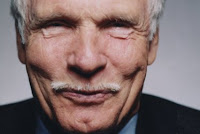 Okay, so Ted Turner's not a people person. But, he has a plan to bring the world's population down to 2 billion-- a figure substantially less than current numbers-- that he says would allow for a better standard of living... for everyone.
 A top-secret meeting of the world’s richest people to discuss the global financial crisis was held in New York on May 5, IrishCentral.com has learned exclusively.
 In addition to Gates, Buffett and Rockefeller, the attendees included Oprah Winfrey, George Soros, Ted Turner, and New York City Mayor Michael Bloomberg, among others.
 How so many giant figures in American life managed to interrupt and coordinate their schedules on such short notice, and meet in total secrecy in the world’s media capital remains a mystery -- as does the ultimate outcome of the billionaires' conference.
 Each attendee was given 15 minutes to deliver a presentation on how they saw the future global economic climate, the future priorities for philanthropy, and what they felt the elite group should do.
 According to one of the attendees, Gates was the most-impressive speaker of the day, with Turner the most-outspoken and Warren Buffet the most-insistent on his agenda for change.
 Gates was worth an estimated $57B in 2008; more recently, Buffett clocked in at an estimated $37B -- making them the richest Americans.
 Other invitees included Eli and Edythe Broad, whose current fortune is estimated at $5.2B by Forbes Magazine; John Morgridge, former CEO of Cisco and his wife Tashia; Peter Peterson, senior chairman of the Blackstone Group; Julian Robertson, founder of Tiger Management Corp.; and Patty Stonesifer, former CEO of the Bill and Melinda Gates Foundation.
![[Д♠]SS:: Yshmael.Jyewrineville.Guerryllas ::SS[♠Д]](https://blogger.googleusercontent.com/img/b/R29vZ2xl/AVvXsEhCux_1zvtXtCXUU1g45SmuhcerGbfqJWE6y6EvENeBIQRw332v-_CgJAArYce0GSray6cTKujiqUDapLcBrZRLz4H6jKF_On40Gfd6mHYsNzE7zoeGPJTTobiAb7VgZBKgIwBAsdWpV5w/s400/samlookingforyou.jpg)
![[Moon.Snow.Chateaux.Blu69] Ignorance of AIDS origins is Bliss; or is it Suicide? | SVCP Smoking Gun of AIDS | Emerging Viruses: Nature, Accident or Intentional?](https://blogger.googleusercontent.com/img/b/R29vZ2xl/AVvXsEgH-OWPcK51iMD9lAEjFdYcemsF9GLctqRkF9vLGPKeSEoADr34W7wB6cdByBgYtBifmt-UFQYlJKSxC9vqt6JTdPgbg_sS2Ufn67tb9ggKje_Nlz2987IJpiC1Bdm3ELXT8Q5YGIf1SxU/s400/44_lily-truth-yewgenics_33.jpg)
![[Д♠]SS:: ThorsTwin.ThomasGoldwater ::SS[♠Д] The Creature from Jekyll Island: The Federal Reserve Bank, by Edward Griffin](https://blogger.googleusercontent.com/img/b/R29vZ2xl/AVvXsEig5WXL-j94C-B6QrhUUq20hiiAQX5ulzTxXA1l70S6fHDx3k3xJ7c_le1mTFhi8KGcFAG3IA0j7p4l6bvcwep7kc0fEB4STLTOvDrOX9WiTlxNmYzJWnLI-4cs8dOYXtSsB892I9tX4Go/s400/bernankes_brew.jpg)


